
Is Military Calisthenics Legit?
Several apps share the “Military Calisthenics” name. This isn't another breakdown of whether the training style works — it's a straight answer on how to tell a legitimate program from a cash grab before you pay for one.
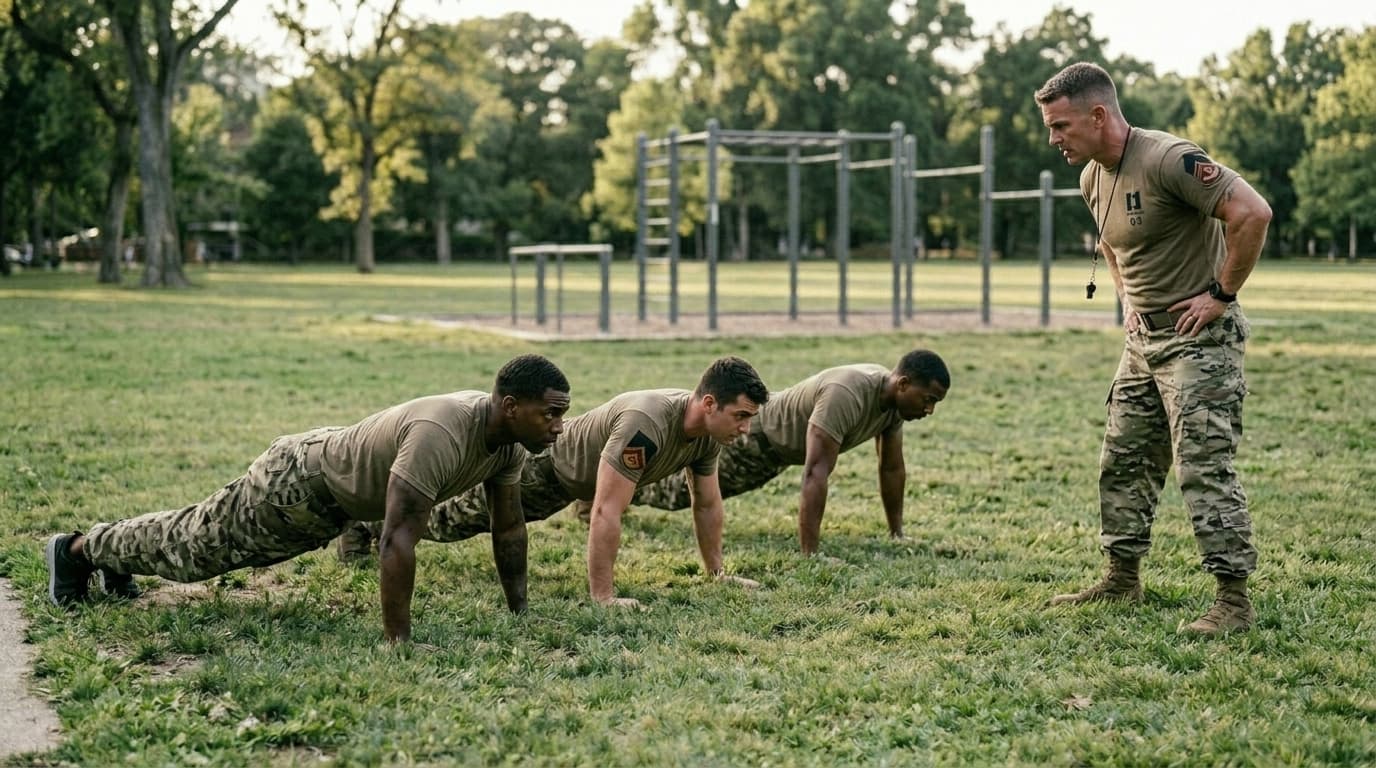
TL;DR — Key Takeaways
- The training style is legitimate; the apps selling it are a mixed bag. "Military calisthenics" is a decades-old public training method with no single owner — several unrelated apps and programs use the name commercially, and each one has to be judged on its own merits.
- The clearest legitimacy signals: a free preview before you pay, progression that actually adapts to your level instead of one looping video, and a cancellation flow that takes one tap — not a maze of screens.
- The most important thing to know: you don't need to buy anything. The exercises are public and free — paying only buys convenience, tracking, or real personalization, and it's only worth it if the program actually delivers that.
Is Military Calisthenics Legit?
The direct answer: It depends which question you're actually asking. As a training style, military calisthenics is completely legitimate — it's the same bodyweight method armed forces have used for decades to prepare recruits, and we cover that evidence in full in our breakdown of whether military calisthenics really works. As a product category — the apps and programs that sell it — legitimacy varies from one specific app to the next, which is what this guide is actually for.
That distinction matters because most people searching for whether "military calisthenics is legit" aren't asking about exercise physiology — they've found an app on the App Store or a program advertised on social media and want to know whether it's worth their money before they hand over a card number. This guide answers that question: not "does the training work" (it does), but "how do I tell a real program from a cash grab wearing the same name."
There genuinely is no single company or founder behind "military calisthenics." It's a generic description of a training style, the same way "HIIT" or "bootcamp workout" describes a category, not one product. That's exactly why multiple, completely unrelated apps can use the same name — and why the label on its own tells you nothing about the quality of what's inside.
Why Are There So Many "Military Calisthenics" Apps?
Because the term describes a training style, not a brand — and nobody can trademark a generic training method. Search any app store for "military calisthenics" and you'll find several independent results: apps named Military Calisthenics Workout, Military Calisthenics Training, and Military Calisthenics Women, plus men's-focused programs like Menletics that market themselves around the same concept. None of them are official, none of them are endorsed by any armed force, and none of them are more "real" than the others simply for using the name first.
This is a common pattern in the fitness app economy: a proven, free, public-domain training concept (push-ups, pull-ups, circuits, running) gets repackaged into a paid product by multiple developers independently, each betting that the search demand for the concept will translate into downloads for their specific app. Some of those apps invest real coaching expertise into the programming. Others are a generic circuit template with a military-themed splash screen. From the outside, the app icon and the marketing copy look almost identical either way — which is exactly why a name-based judgment isn't enough.
The practical takeaway: stop asking "is military calisthenics legit" as if it were one product, and start asking "is this specific app legit" every time you're about to pay for one. The next two sections give you the exact signals to check.
The Red Flags: How to Spot a Cash Grab
Red flag: No free content before you’re asked to pay
Why it matters: If every screen before checkout is marketing copy and testimonials — no sample workout, no visible exercise list — the app has something to hide about what you're actually buying.Red flag: A cancellation flow that’s harder than the signup flow
Why it matters: The FTC issued a 2021 enforcement policy statement specifically targeting subscription apps that trap users with sign-up processes far easier than their cancellation processes. Test the cancel button before you subscribe, not after.Red flag: Countdown timers and “limited spots” messaging
Why it matters: A digital app has unlimited inventory — there is no real scarcity in a download. Artificial urgency is a pressure tactic, not a legitimate business constraint.Red flag: Reviews that are five-star but completely generic
Why it matters: The FTC's 2024 final rule banning fake and incentivized reviews exists because this pattern is common enough to regulate. Read the most recent reviews, not the star average, and look for specific, detailed feedback about the actual program content.Red flag: Promises of a dramatic transformation in under 2 weeks
Why it matters: No training style, military-branded or not, produces visible muscle change that fast — early gains in the first 2–4 weeks are mostly neural adaptation, not new tissue. A program overselling its timeline is a marketing problem, independent of whether the workouts themselves are decent.Red flag: One fixed video loop with no adjustment for your level
Why it matters: If the “program” is the same circuit on repeat regardless of what you enter as your starting fitness, it isn't programming — it's a workout video with a subscription price attached.
Read the full FTC policy statement on subscription dark patterns and the final rule banning fake reviews and testimonials if you want the source material — both are aimed at exactly the tactics some fitness apps still use.
How to Evaluate a Program Before You Buy
Flip the red flags around and you get a real evaluation checklist. This takes about 15 minutes and works for any military calisthenics app, not just one specific product.
Check for a free preview
A legitimate program shows you at least one full real workout before asking for payment — not just marketing screenshots or a demo reel.
Confirm the progression actually adapts
Does it ask your current fitness level and adjust difficulty week to week, or is it the same circuit on a loop regardless of your input?
Test the cancellation flow first
Search “[app name] cancel subscription” before you sign up. One tap in account settings is a green flag; an email request or phone call is a red one.
Look for a named coach or credentialed team
Check the About page for who actually designed the program. A generic brand name with no identifiable author behind it is a meaningful gap, not a dealbreaker on its own.
Read this week's reviews, not the star average
Sort by most recent and look for specific mentions of real workout content. Vague, generic five-star reviews with no detail are exactly the pattern regulators have flagged as fake.
Sanity-check the timeline claim
Expect real but early-stage results by 28 days and visible physical change around 6–12 weeks — for any program. Anything promising faster is selling a timeline biology doesn't support.
“Buying an app doesn't buy you discipline — it buys you friction removal. If the only thing between you and consistency is not knowing what to do today, a good program earns its price. If the problem is showing up at all, the monthly charge just buys you a guiltier version of the free plan you were already ignoring.”
Generic Apps vs. Personalized Coaching
Once you strip away the military branding, what you're really choosing between is a fixed template and something that adapts to you. Here's the honest comparison:
| Factor | Generic "Military Calisthenics" App | Personalized Coaching (Odin) |
|---|---|---|
| Program structure | Often one fixed circuit or video series applied to everyone | Built from your goal, available days, session length, and equipment |
| Pricing transparency | Varies widely — verify before signup | Free plan shown before any signup |
| Free preview | Depends on the specific app | Full first week visible for free |
| Cancellation | Check before you sign up, every time | No subscription trap to escape |
| Evidence for personalization | Rarely disclosed how (or whether) the program adapts | Personalized programs show meaningfully larger effects on behavior change in published research |
Free vs. Paid: Do You Need to Buy Anything?
No — you don't need to pay for a military calisthenics app to get real results. The exercises (push-ups, pull-ups, sit-ups, planks, running) and the circuit structure that defines the style are public knowledge, not something any single company invented or owns. Our own 30-day calisthenics roadmap lays out a complete, free progression built on the same principles.
So what does paying actually buy you? In most cases: less decision-making (someone else picks today's workout), built-in tracking, reminders, and — if the app is genuinely well-built — real personalization that adapts as you progress. None of that is worthless. But it's worth being honest that you're paying for convenience and accountability infrastructure, not for access to a secret method.
There's a sobering stat worth knowing before you commit to any paid program, free or not. A 2020 systematic review and meta-analysis in the Journal of Medical Internet Research (Meyerowitz-Katz et al.) found a pooled dropout rate of 43% across app-based health interventions — meaning close to half of people who start a structured app-based program stop using it before finishing, regardless of price. Paying for an app doesn't buy consistency; it can, at best, remove some of the friction that gets in consistency's way.
If you want to test the waters before spending anything, start with the free weekly bodyweight planner — it builds a real, personalized schedule from your goal, available days, and equipment without asking for a card number first. If you outgrow it or want done-for-you extras, that's the point at which paying for something starts to make sense.
Common Mistakes When Buying a Fitness App
Mistake: Judging legitimacy by the name alone
Fix: “Military calisthenics” describes a training style shared by several unrelated apps, not a single trusted brand. The name tells you nothing about programming quality — check the app itself.Mistake: Not checking cancellation terms before subscribing
Fix: Test the cancel flow while you're deciding whether to buy, not after your card has already been charged for a renewal you forgot about.Mistake: Trusting the star average without reading recent reviews
Fix: A 4.8-star average can hide months of unaddressed complaints if it's built on old reviews. Sort by most recent and read what people are actually saying about the current version.Mistake: Assuming gender-targeted branding means different programming
Fix: “For men” or “for women” marketing is almost always packaging around the same push-up, pull-up, and circuit fundamentals — the exercises adapt to fitness level, not sex.Mistake: Paying for content you could get free
Fix: If a program's entire value is “here are push-ups, pull-ups, and a circuit,” that's freely available information. Pay for genuine personalization, tracking, or coaching — not for exercises you can find in a free article.Mistake: Expecting a purchase to guarantee adherence
Fix: Roughly 4 in 10 people who start an app-based health program stop before finishing, regardless of what they paid. A subscription buys tools, not willpower — plan for how you'll actually stay consistent, not just what you'll buy.
Who Should (and Shouldn't) Buy One?
Buy one if you genuinely want done-for-you structure and the specific app passes the checklist above. Skip it if you're a total beginner who just needs the free basics, or if you've already been burned by a subscription trap. The purchase decision has almost nothing to do with whether military calisthenics "works" — it works — and everything to do with what you personally need from a paid product.
Worth considering for
People who have the money but not the time or interest to structure their own training, who want built-in tracking and reminders, and who've verified the specific app they're looking at against the checklist in this guide.
Skip it if you're
A total beginner who just needs to learn the fundamentals first (start with our beginner calisthenics guide), already dealing with a subscription you regret, or shopping based on the "military" label alone rather than the specific app's actual content.
If you're on the fence, the lowest-risk move is to try a genuinely free option first — our own 30-day roadmap or the weekly bodyweight planner — and only pay for something once you know specifically what you're missing that a free plan doesn't give you.
Frequently Asked Questions
Is military calisthenics a real thing?
Is military calisthenics any good?
Are military calisthenics apps and programs legit?
Is military calisthenics worth it for men specifically?
Do I need to pay for a military calisthenics app, or can I do it free?
What's the difference between the training style and the apps that sell it?
Get a Real Program Built Around You — Free
Skip the app-store guesswork. Answer a few questions about your goal, schedule, and equipment and get a personalized weekly plan before you spend a cent.
Build My Free Weekly Plan