
Single-Leg Squat Progression: The Beginner Path to a Pistol Squat
A single-leg squat is a pistol squat by another name. This is the beginner on-ramp — regressions, mobility prerequisites, and a clear starting point before you move to the full progression.
TL;DR — Key Takeaways
- Single-leg squat = pistol squat. They are the same exercise — "single-leg squat" is the clinical/anatomical name, "pistol squat" is the fitness name.
- Start with regressions, not the full move. Box-assisted and band-assisted single-leg squats build the pattern safely before you attempt full depth.
- Ankle mobility is the most common bottleneck. If you can't drive your knee past your toes with your heel flat, fix that first.
Single-Leg Squat vs. Pistol Squat — Same Move, Different Names
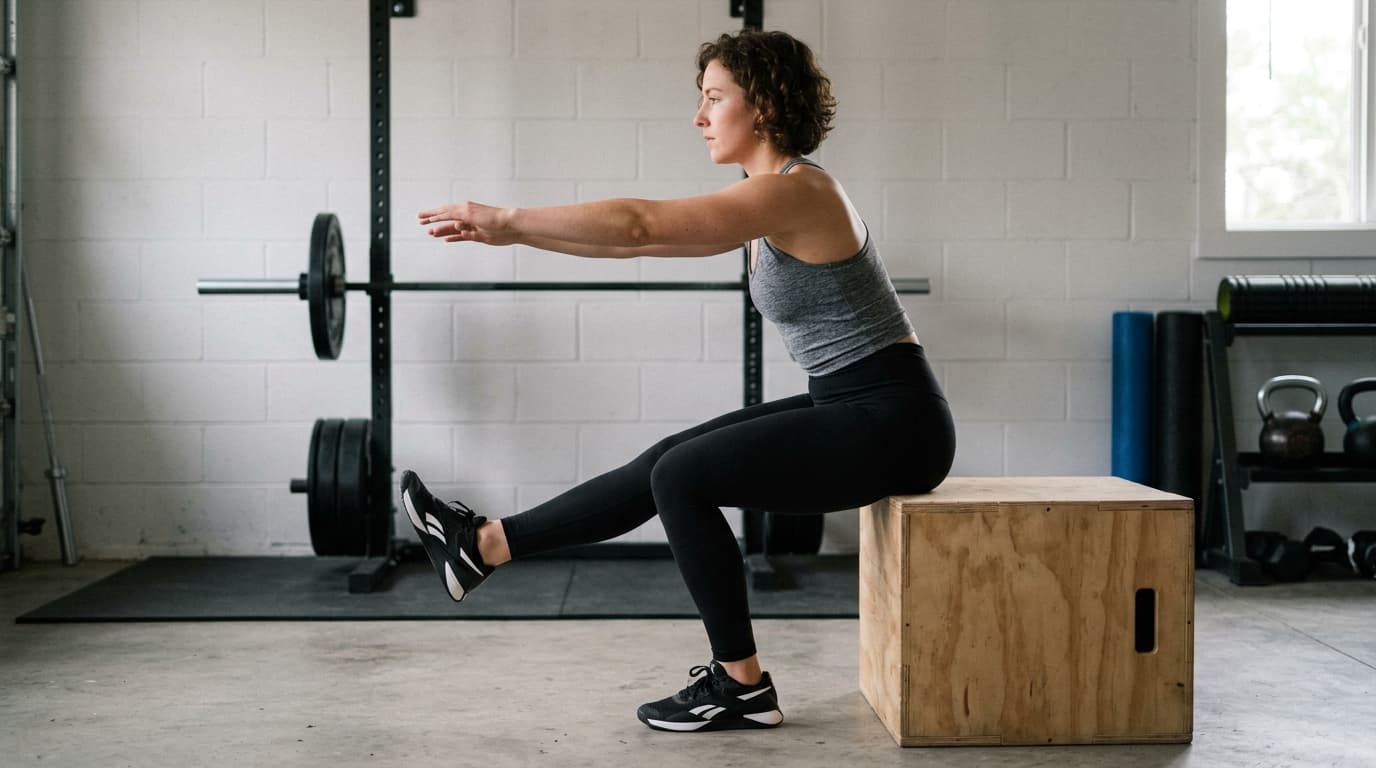
A single-leg squat and a pistol squat are the same exercise. Squatting on one leg to full depth, with the other leg held extended off the ground, is called a "single-leg squat" in clinical and rehab settings and a "pistol squat" in calisthenics and general fitness — the movement itself doesn't change.
If you landed here searching "single-leg squat progression" or "one-legged squat progression," you're likely coming from a physical-therapy background, a rehab program, or simply prefer precise, anatomical terminology over fitness slang. Either way, this page gives you the beginner-focused starting point. Once you're comfortable with the regressions below, the full pistol squat progression guide covers every level from assisted reps through advanced variations in depth.
Regression Progression for Beginners
Start with a regression, not the full single-leg squat. Box-assisted squats limit your range of motion; band-assisted squats offset part of your bodyweight. Both let you practice the pattern under control before adding full depth and balance demand.
Training each leg independently is worth the extra setup: a 2017 systematic review in the Journal of Sports Sciences (Bishop, Turner & Read) found that inter-limb strength asymmetries are detrimental to jumping, kicking, and cycling performance — bilateral squats can hide a meaningful left-right gap that single-leg regressions expose and correct early, before it becomes a bigger problem at full pistol squat depth.
Box-Assisted Single-Leg Squat
Setup: Stand on one leg in front of a 20-24 inch box or bench, opposite leg extended forward.
Execution: Lower under control until your glutes lightly touch the box, then drive back up through your heel.
Sets × Reps: 3 sets × 8-10 reps per leg
Band-Assisted Single-Leg Squat
Setup: Anchor a resistance band overhead (pull-up bar, sturdy anchor point) and hold it with both hands.
Execution: Perform a single-leg squat while the band offsets part of your bodyweight through the bottom range.
Sets × Reps: 3 sets × 8-10 reps per leg
Partial Range-of-Motion Squat
Setup: No box needed — simply squat only as deep as you can control with good form.
Execution: Lower to your current depth limit, pause briefly, then stand. Add 1-2 inches of depth each week as strength and mobility improve.
Sets × Reps: 3 sets × 8-12 reps per leg
Mobility Prerequisites
Ankle dorsiflexion is the single biggest mobility limiter for single-leg squats. If you can't push your knee past your toes with your heel flat on the ground, deep squat depth will be difficult or impossible no matter how strong your legs are.
Test it: stand facing a wall with your toes 4-5 inches away, then bend your knee forward to touch the wall without your heel lifting. If you can't, spend 2-3 weeks on daily ankle mobility work before pushing depth further.
The research backs up why this matters more than leg strength for most beginners. A 2015 study in the Journal of Human Kinetics (Kim et al.) found ankle dorsiflexion range of motion explained 38.8% of squat depth variance in men and 23.7% in women — more than any other single factor measured, including hip flexion range and dorsiflexor strength. In plain terms: you can be strong enough for a single-leg squat and still be unable to sit into full depth if your ankles don't have the range to allow it.
For a dedicated breakdown of ankle mobility testing, drills, and the specific dorsiflexion range single-leg squats require, see the ankle dorsiflexion guide rather than duplicating that work here.
“Most people who think they 'can't do pistol squats' have never actually tested their ankle mobility — they just assumed it was a strength problem, added more leg work, and stayed stuck at the same depth for months. Test the ankle first. It's a five-minute check that saves most beginners weeks of wasted effort.”
Common Regression Mistakes
Lowering the box before you’re ready
Dropping box height because a session felt easy, rather than because you hit the 10-12 rep control standard, is the fastest way to build a wobbly, compensated pattern instead of a strong one. Depth should always follow control, not the other way around.
Skipping the ankle test entirely
Given how large a share of squat depth ankle dorsiflexion accounts for, skipping the wall test and going straight to box regressions means you might spend weeks blaming leg strength for what is actually a mobility limitation. Test it in the first session, not after a month of stalled progress.
Neglecting the non-working leg
The extended leg isn't passive — actively engaging the quad and holding it roughly parallel to the floor builds the hip flexor and core control the full pistol squat eventually demands. Letting it drop or dangle limits carryover to the unassisted movement.
Training only one leg because it’s the weaker one
It's tempting to hammer your weaker leg to "catch it up," but both legs need progressive volume — the goal is closing the gap through balanced training, not creating a new imbalance by neglecting your stronger side.
What Comes After the Single-Leg Squat Progression?
Once you can complete the regressions above with control, you're ready for the full pistol squat progression — counterbalance work, full bodyweight reps, and advanced variations.
Frequently Asked Questions
Is a single-leg squat the same as a pistol squat?
What's an easier version of a single-leg squat?
How long does it take to progress from a single-leg squat to a full pistol squat?
Why is single-leg squat progression important before attempting a pistol squat?
What mobility do you need for a single-leg squat?
Do single-leg squats build the same muscles as regular squats?
Build Single-Leg Strength Into Your Week
Create a personalized plan that balances squat progressions with upper-body work, core training, and recovery.
Build My Free Weekly Plan